Skylights in hot climates: U-factor, shading and energy efficiency
Mohammed Shoukry · 8 January 2024 · 2 min read
U-factor and shading factor
U-factor and shading factor are two important properties of glazing materials that are used to determine the energy efficiency of windows and skylights.
- U-factor measures the rate of heat that conducts through a window or skylight, in either direction. The lower the U-factor, the better the window or skylight insulates.
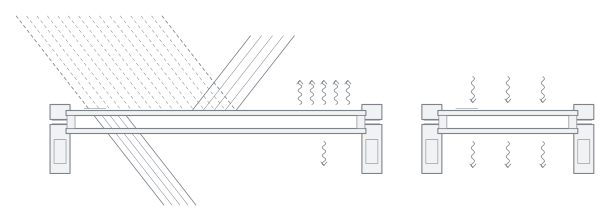
- Shading factor, also called the shading coefficient, measures the amount of solar heat that is transmitted through a window or skylight. Today it is usually given as the solar heat gain coefficient (SHGC). The lower the shading factor, the less solar heat is transmitted.
Show the data
| Sunlight reaching the glass | 100% |
|---|---|
| Reflected | 30% |
| Transmitted directly | 22% |
| Absorbed, given off outward | 40% |
| Absorbed, given off inward | 8% |
| Solar heat gain coefficient (SHGC) | 0.22 + 0.08 = 0.30 |
| Sun on the skylight at midday | 900 W/m² |
| Solar heat gain, 900 × 0.30 | 270 W/m² |
| U-factor | 1.7 W/m²·K |
| Conducted, 1.7 × (38 °C − 24 °C) | 24 W/m² |
In hot weather countries, it is important to choose windows and skylights with low U-factors and low shading factors. This will help to keep the building cool and reduce the need for air conditioning.
Target values for skylights in hot climates
The right values for U-factor and shading factor for skylights in hot weather countries will vary depending on the specific climate and the local energy code. As a general guide, aim for a U-factor of about 1.7 W/m²·K or lower and a solar heat gain coefficient of about 0.3 or lower. A skylight faces the sun for most of the day, so in a hot climate a low solar heat gain matters most.
In addition to U-factor and shading factor, there are other factors to consider when choosing skylights for hot weather countries. These factors include:
- Solar control glazing. Solar control glazing is a type of glazing that has been treated to reflect or absorb solar heat. This can help to keep the building cooler and reduce the need for air conditioning.
- Low-emissivity coatings. Low-emissivity (low-e) coatings reduce the heat radiated through the glass. In a hot climate, a solar control low-e coating on the outer pane of a double-glazed unit keeps much of the sun’s heat out while still letting daylight in.
- Insulation. Thermally broken aluminum frames and an insulated curb help to improve the energy efficiency of a skylight.
By considering all of these factors, you can choose skylights that will help to keep your home or office cool and comfortable in hot weather.
More tips for designing skylights in hot climates
In addition to choosing the right glazing materials, there are other things you can do to design skylights that are energy efficient and comfortable in hot weather. These tips include:
- Locate skylights in the shade. If possible, locate skylights in the shade of trees or other buildings. This will help to reduce the amount of solar heat that enters the building.
- Use overhangs or awnings. Overhangs, awnings or external louvers can be used to shade skylights from the sun. This can help to keep the building cooler and reduce the need for air conditioning.
- Ventilate the space below the skylight. Ventilation can help to remove hot air from the space below the skylight. This can help to keep the space cooler and reduce the need for air conditioning.
By following these tips, you can design skylights that are energy efficient and comfortable in hot weather.