The Walkie-Talkie: when a facade became a magnifying glass
Mohammed Shoukry · 8 January 2024 · 2 min read
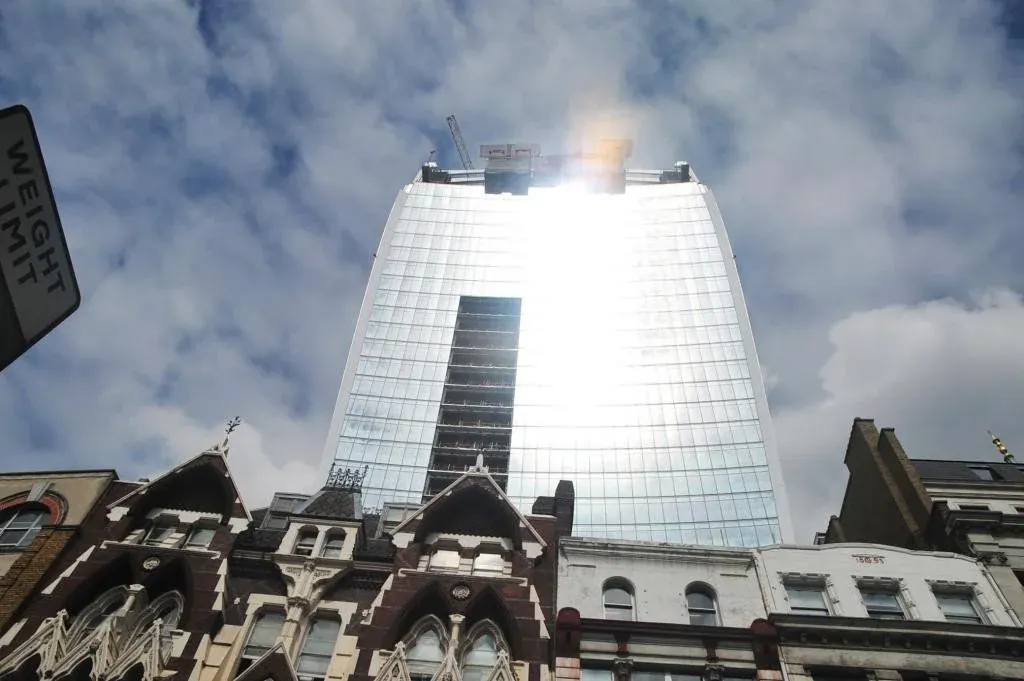
Design and construction are complex processes that require meticulous attention to detail, especially when it comes to the shape and materials of a facade. In the case of the Walkie-Talkie in London, a striking architectural landmark, the shape of the facade turned the building into a magnifying glass, focusing sunlight onto the street and creating unexpected wind effects. This article looks at these well-known incidents and their impact on the surrounding streets and unsuspecting passersby.
The Walkie-Talkie: a unique design
Located in the City of London, 20 Fenchurch Street was constructed between 2009 and 2014. Designed by the architect Rafael Viñoly, the tower widens as it rises, and its curved shape earned it the nickname "the Walkie-Talkie." However, it was not just the building’s shape that gained notoriety but the unintended consequences that accompanied it.
The magnifying glass
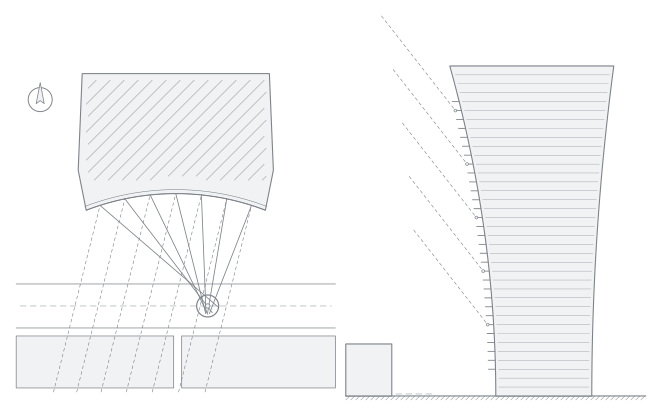
The curved glass facade of the Walkie-Talkie acted as a giant mirror, reflecting and focusing sunlight onto the street below. Because the south face is concave, it gathered the reflected sunlight into a concentrated beam. In 2013, reporters from City A.M. measured almost 70 °C at shop fronts on Eastcheap. The beam warped the wing mirror, badge and panels of a parked Jaguar XJ, and journalists even managed to fry an egg in the street, highlighting the alarming nature of the reflected heat.
Remedial measures
The heat issues prompted swift action. Temporary screens were first put up at street level, and in 2014 a permanent brise-soleil of horizontal aluminum fins was added to the south face, between the 3rd and 33rd floors. The fins break up the reflection of direct sunlight and removed the danger posed by the building’s design flaw.
The unforeseen wind tunnel effect
In addition to the heat issues, the Walkie-Talkie created strong winds at street level. The tall, wide tower deflected wind down to the ground, resulting in strong gusts in the surrounding streets. Signs were blown over and pedestrians struggled to keep their footing, posing safety risks and drawing further attention to the building’s design shortcomings.
Lessons for architecture and construction
The incidents surrounding the Walkie-Talkie serve as a reminder of the importance of thorough design and engineering analysis. The shape of a facade, the choice of glass, the consideration of environmental factors, and the potential impact on surrounding areas should be carefully evaluated during the design phase, with sun reflection and wind studies where the geometry calls for them. Lessons learned from such incidents help architects and engineers refine their practices and prioritize the safety and functionality of their designs.
The Walkie-Talkie in London is a prime example of the unforeseen consequences that can arise from design flaws. The heat and wind effects caused by the building’s concave shape brought widespread attention to the way a facade’s geometry interacts with sun and wind, and to the need for comprehensive design evaluation. By learning from these incidents, the architecture and construction industries can continue to innovate while ensuring the safety and well-being of both the built environment and its occupants.